Starform's Fasulo on AI, small teams and player funding
Starform CEO Lou Fasulo discusses how AI boosts throughput for his 26-person team, the philosophy behind keeping the studio small, and why he believes

Starform CEO Lou Fasulo says his studio's use of AI is about increasing throughput, not unlocking new capabilities. The Seattle-based developer, which launched the 5v5 air-combat game Metalstorm in November 2023, now counts 15 million players across mobile and PC platforms.
Fasulo, speaking at the SLICE 2026 event, framed 'AI-native' as a journey. He told Pocket Gamer Biz it does not enable entirely new feats. Instead, it allows his small team to ship more features and address player feedback faster. This leads to a better experience. The team uses AI for mundane tasks, freeing people for higher-order creative decisions. This is how a team of 26 aims to serve millions.
He is clear about the technology's limits, especially regarding recent one-prompt game demos. He detailed the thousands of specific decisions behind a single Metalstorm aircraft, from its acceleration curve to its silhouette readability at distance. "When you don't specify one, the model just makes something up," Fasulo said. He views this as acceptable for a prototype but not for a full, live game.
The case for 26 people
Fasulo argues the ideal team size is about culture and processing feedback, not sheer output. A team must be small enough to genuinely hear every member's voice. He contrasted this with massive projects, like a Halo update worked on by thousands, where individual contributions can diminish. For him, scaling a team directly scales the breakeven point. "I don't think double-A is a place you arrive. It's a cost structure," he stated.
This philosophy was tested during Metalstorm's development. Early versions were simulation-heavy and praised by a small group. When thousands of new players arrived, reception soured. The studio faced a hard choice. The easy path was incremental improvement. Starform chose a hard pivot on all core mechanics instead. Fasulo admits it was a costly decision that risked losing team members.
Cross-platform play by accident
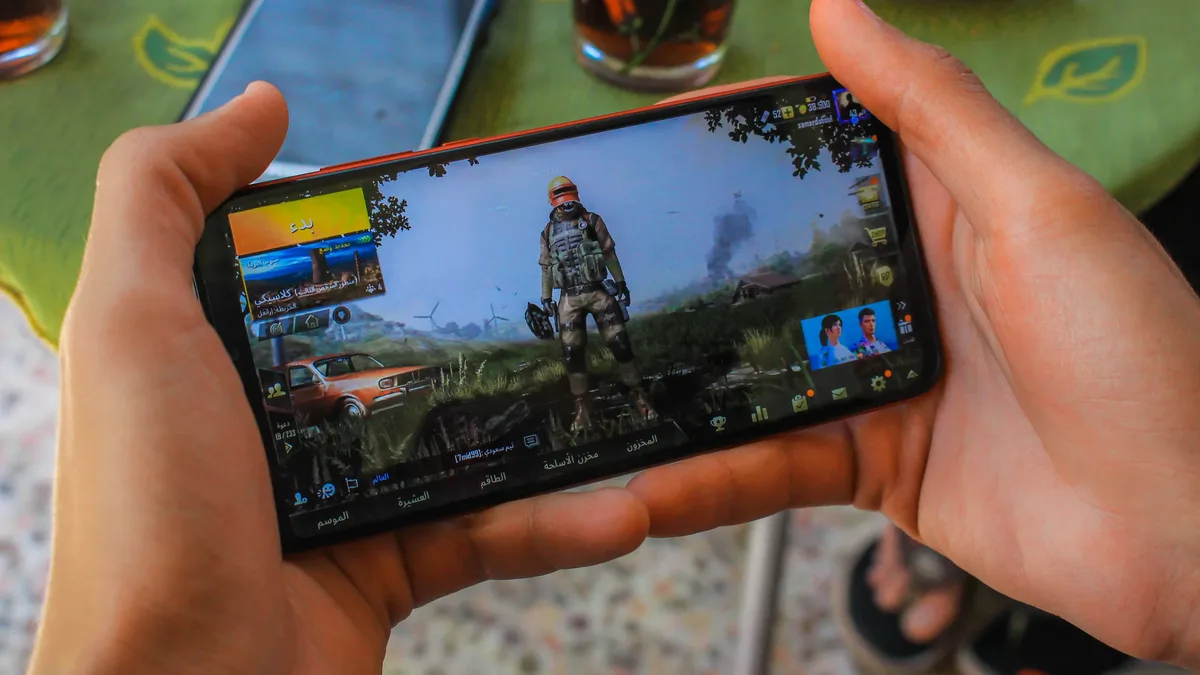
Metalstorm runs on iOS, Android, and PC via the Epic Games Store. Fasulo believes mobile and PC audiences usually want different experiences. For Metalstorm, a shared session length emerged by accident during prototyping. The team settled on five to seven-minute matches and observed player behavior.
They would not stop and turn and talk to us about what was happening. They just kept playing, Fasulo explained. Players treated matches like eating chips from a bag. This repeated-session behavior, not a top-down strategy, convinced the team the format worked on both mobile and PC.
Players fund the live game
Starform has not raised funds since a $6 million round from Bitkraft in late 2024. Fasulo says the studio is not currently seeking investment. He challenges the notion that a studio financially 'feeds' a live game. In his view, the players provide the real sustenance through their time and money.
We're not the reason the game is still alive. It's the players that love it, he argued. He contends that much venture funding into new studios fails to produce games that find a lasting audience. The problem, he suggests, is not player 'tourism' but that new games often fail to win players away from their existing hobbies.
With Metalstorm live and a new title in early planning, Fasulo was asked how a small team manages both. His answer focuses on shifting costs. He believes discovery and gameplay innovation are now relatively cheap. The significant expense lies in scaling production to deliver a polished experience to a massive player base. For Starform, that scale is 15 million players and counting.